
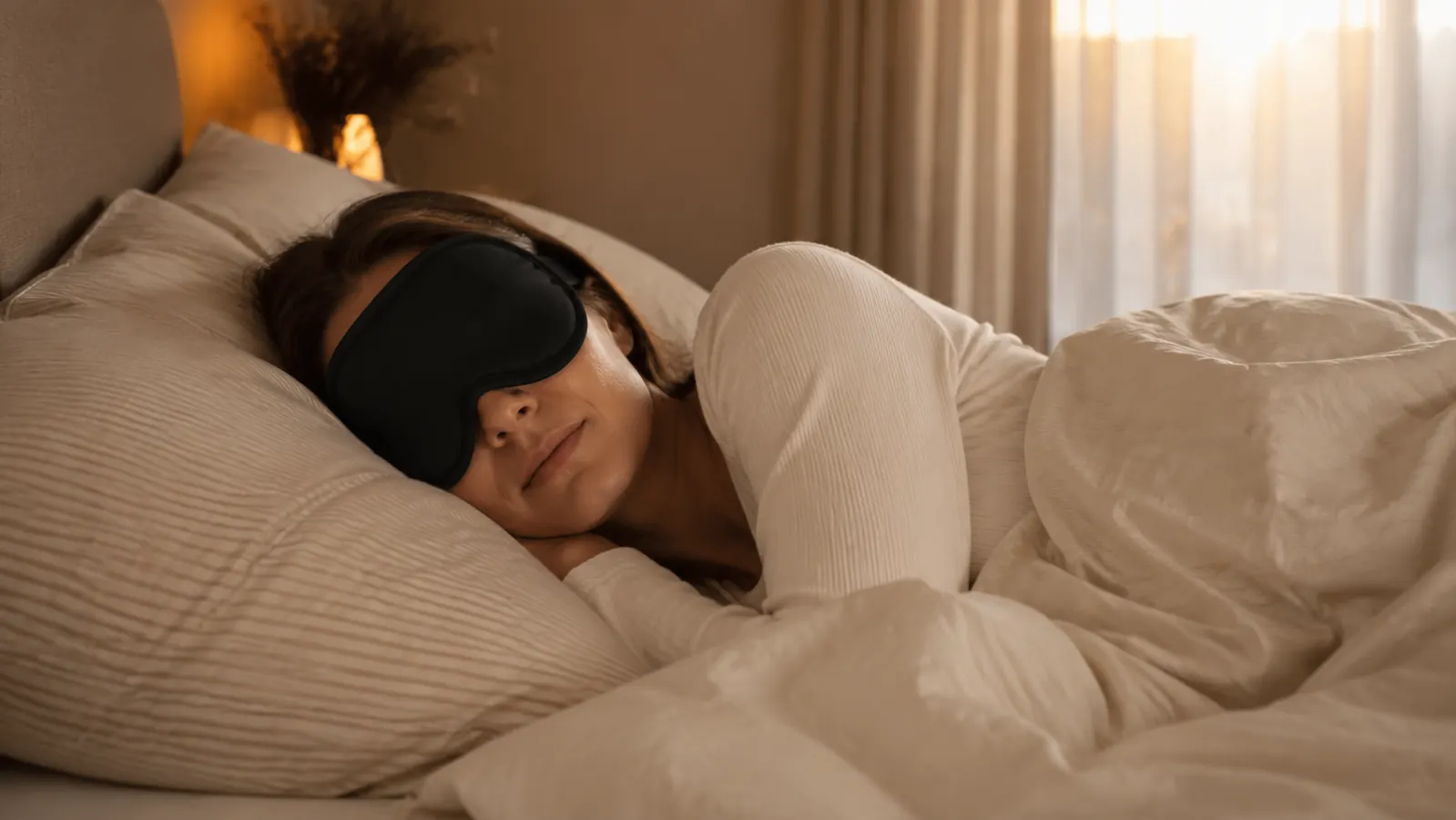
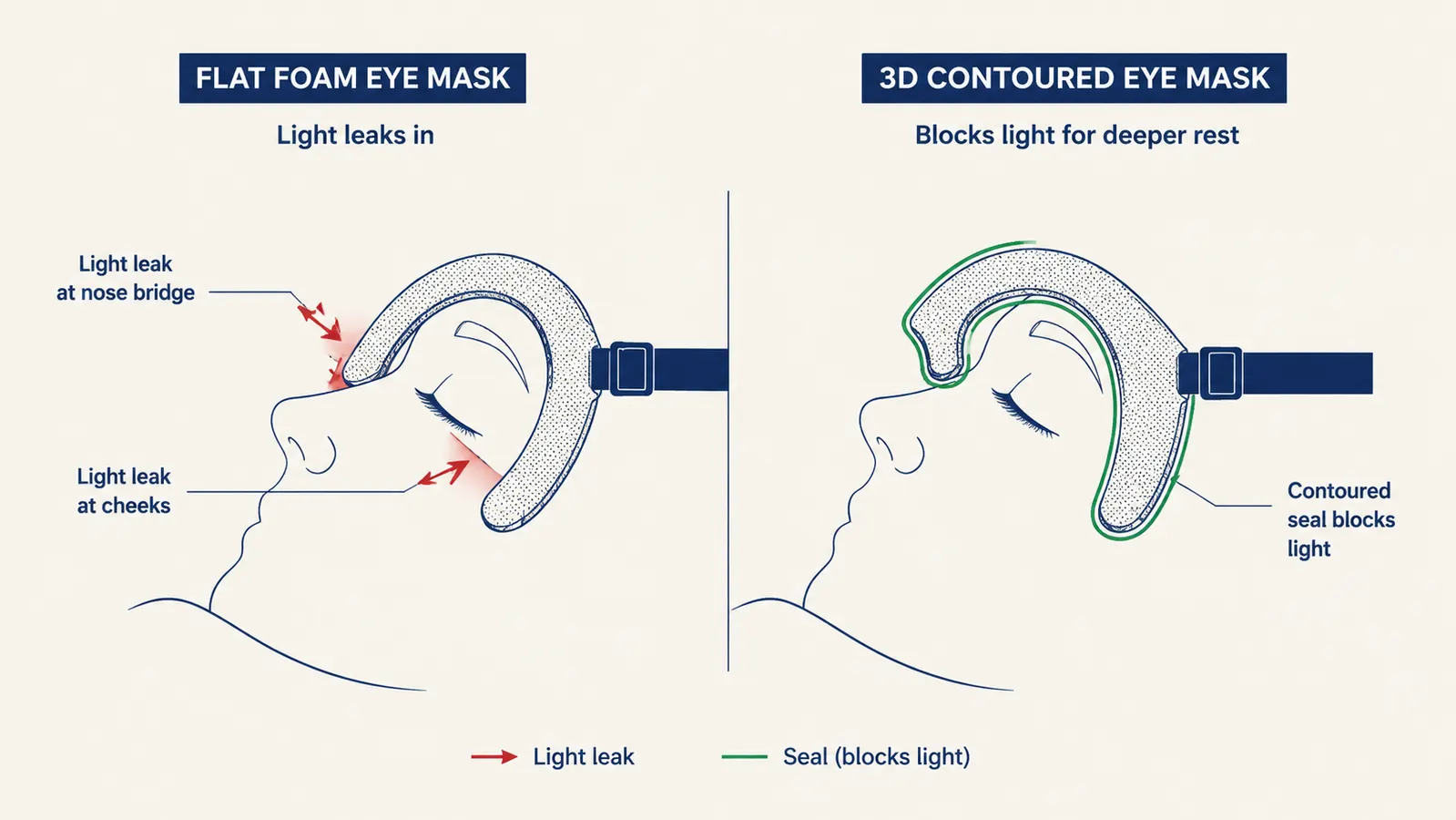
If you have ever woken up at 5 a.m. to a stripe of light across your face, you already know the problem. A flat foam eye mask sits flat against your eyelids and your nose bridge, but skin is not flat, so light finds its way in along the edges every single time. A 3D sleep mask solves this with a contoured frame that holds the fabric off your eyes and seals against your face at the right angles. I have recommended them to patients who work night shifts, to parents trying to sleep past the kids' wake-up call, and to anyone whose partner keeps odd hours. The difference is immediate and it is physical, not psychological.
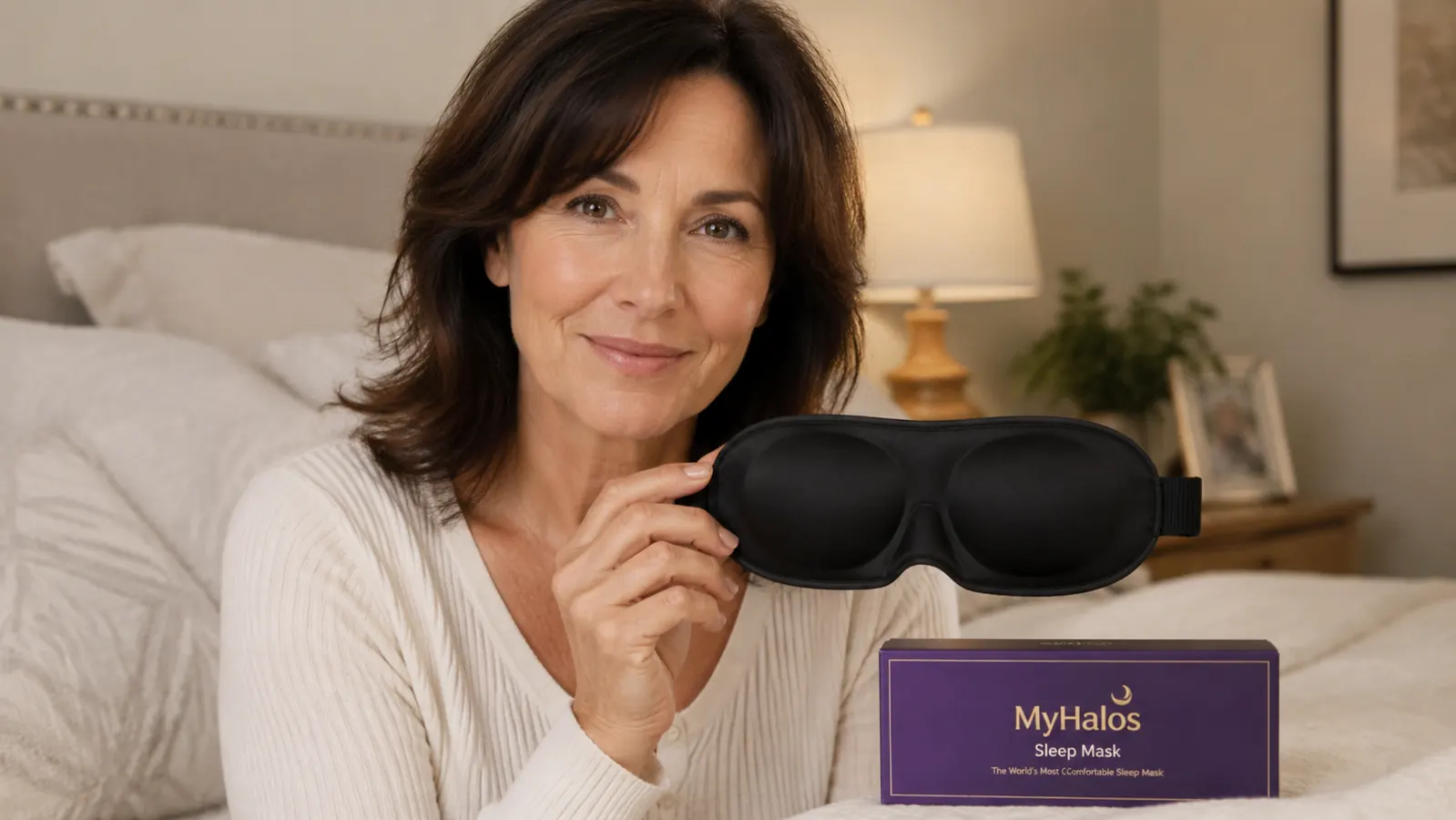
The MyHalos 3D blackout sleep mask is what I point people toward when they ask for a specific pick. It costs very little, has over 21,000 reviews with a 4.7-star average, and the contoured eye cup design is exactly what makes a 3D sleep mask work better than the flat alternative. Below are the ten reasons the design wins, drawn from how the body actually responds to light and pressure during sleep.
Light is still reaching your eyes. Here is the fix.
The MyHalos 3D blackout sleep mask uses raised eye cups to block light without pressing on your lashes or lids. Budget-priced. Over 21,000 five-star ratings.
Amazon Check Today's Price on Amazon →The raised dome keeps fabric off your eyelids
This is the core structural difference between a 3D sleep mask and a flat one. The molded eye cups in a contoured 3D sleep mask arch over your eyes without touching them. Your lashes do not brush the fabric with each blink, and your lids do not feel compressed. For anyone prone to dry eyes or who wakes up feeling that low-grade eyelid irritation, this alone is worth the switch.
Contoured edges seal along your nose bridge
The biggest light-leak point on a flat mask is the gap where your nose meets the inner corners of your eyes. A contoured sleep mask shapes itself to follow that angle, pressing softly against the upper nose ridge and closing the gap. Street lights, hallway light under the door, your partner's phone screen at 2 a.m., all of it blocked.
Side sleepers do not lose the seal when they turn
Flat masks shift when you roll onto your side. The cheek presses up, the mask tilts, and suddenly there is a gap above your brow line. A 3D blackout sleep mask with an adjustable strap holds its position even when your face is against the pillow. The dome sits over your eye socket and the cheek pad stays flat against your cheekbone regardless of which side you are on.
No pressure on your cornea means no visual distortion
Flat masks press directly on your eyes. Some people tolerate this fine. Others wake up with a mild headache or blurred vision for a minute or two, which is the eye adjusting after sustained pressure. The eye cup in a 3D sleep mask sits over the socket, not on the eyeball. The cornea rests in darkness without any contact pressure for the duration of your sleep.
The adjustable strap works for every head size
A strap that is too tight leaves a band of pressure across the back of your head. Too loose and the mask slides down by 3 a.m. The MyHalos 3D sleep mask uses a velcro adjustable strap that you dial in once and leave. It accommodates smaller heads without digging in and larger heads without gaps at the temples.
The first morning I did not reach for the curtain cord before my alarm, I understood what total darkness actually does for sleep. Not placebo. My body simply did not get the early signal to wake up.
Blackout coverage extends above the brow line
Light does not only enter at eye level. A wide upper frame on a contoured 3D sleep mask covers the forehead down to mid-cheekbone, so overhead light from a skylight or a window positioned above your bed does not sneak in over the top edge. If you have ever tried to nap under a bright ceiling light and found even a standard mask unhelpful, a taller 3D design fixes the geometry.
The soft inner lining is gentler on skin around the eyes
The periorbital skin, the thin skin around your eye socket, is among the most delicate on your body. Rough or stiff materials leave creases and can irritate the skin barrier over weeks of nightly use. The lining on the MyHalos 3D blackout sleep mask is a smooth fabric designed for repeated contact with that area. It comes off in the morning without redness along the mask edge.
It packs flat for travel without losing its shape
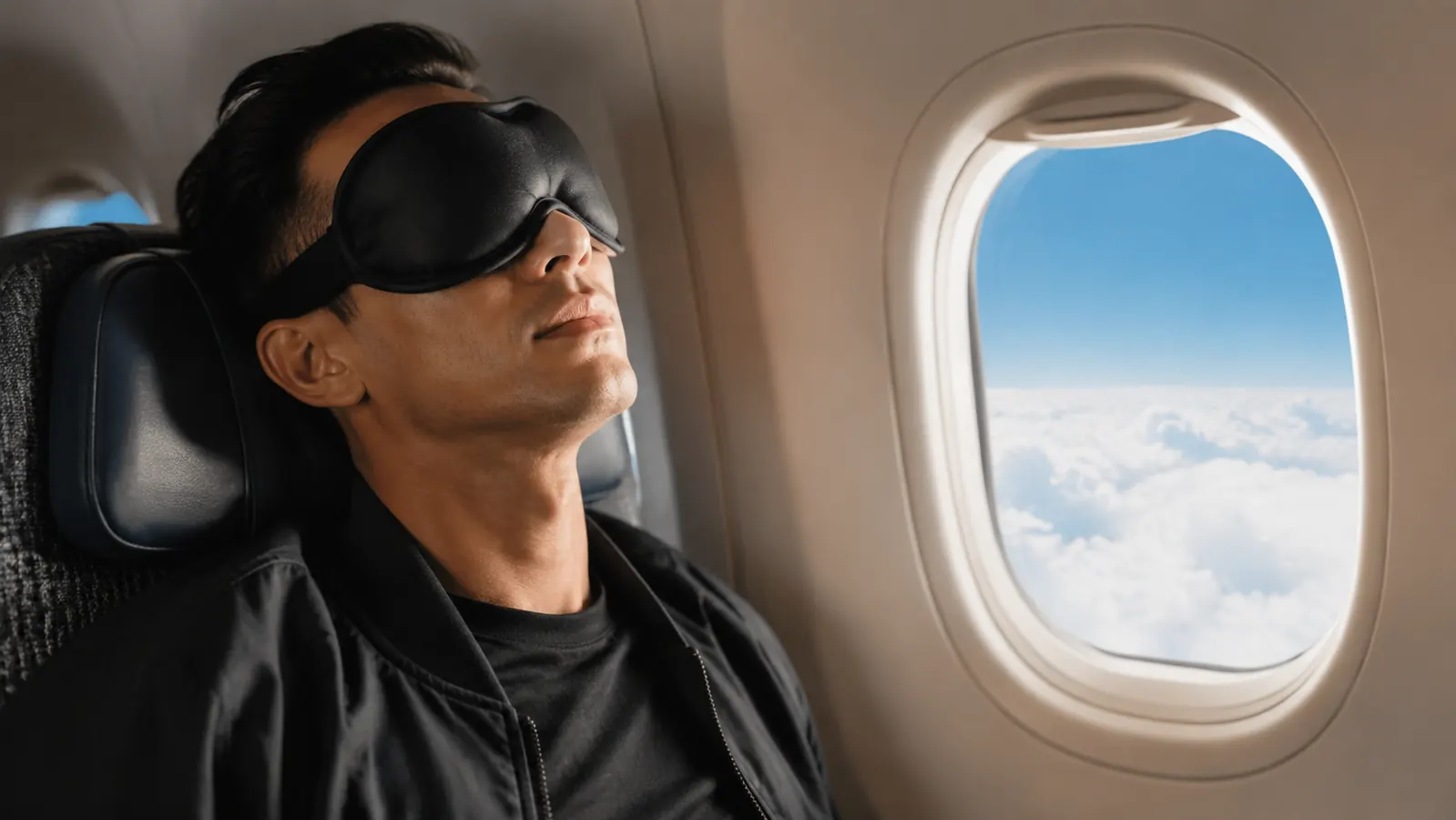
The rigid frame on a 3D sleep mask might seem like a packing problem, but the MyHalos design compresses into a carry-on pocket and springs back to shape. For shift workers who sleep in break rooms, travelers crossing time zones, or anyone who naps in places with uncontrollable light, having a 3D blackout sleep mask that survives a bag is practical, not just nice to have.
Total darkness signals your brain to stay in sleep mode
Photoreceptors in the retina send light signals to the suprachiasmatic nucleus, which is the brain's primary clock. Even low-level light exposure through closed eyelids can suppress melatonin and shorten deep sleep cycles. A genuine blackout sleep mask, meaning one that actually seals the way a contoured 3D sleep mask does, removes that stimulus. The brain interprets the environment as night, and the sleep cycle continues rather than shifting toward waking.
Budget-friendly is a reasonable price to test it
At current pricing, the MyHalos 3D sleep mask costs less than a single over-the-counter sleep aid. If it does not work for you, you have not committed to much. But for most people who switch from a flat mask to a contoured 3D sleep mask, there is no going back. The blackout is simply better, the fit is more stable, and there is no lash contact to get used to.
Amazon Check Today's Price for the MyHalos 3D Sleep Mask on Amazon → →
What I'd Skip
If you run very warm at night and need airflow around your face, any close-fitting sleep mask, including a 3D design, can feel uncomfortable in hot weather without air conditioning. In that case, a lightweight satin flat mask may be more tolerable even if it blocks less light. For detailed wear testing, read my full MyHalos sleep mask review and the honest review that covers fit tradeoffs in more depth. The 3D sleep mask is the right tool for most situations, but not every situation.
Ready to stop waking up to light before your alarm?
The MyHalos 3D blackout sleep mask seals out light at every angle, costs very little, and comes with over 21,000 ratings to back it up. One purchase, permanent fix.
Amazon Check Today's Price on Amazon →