

I have spent twelve years as a physical therapist watching people sit up straighter, stretch more carefully, and buy every ergonomic gadget on the market, and then come back to my table the next week with the exact same stiff neck they walked in with. When I ask what they are sleeping on, the answer is almost always the same: whatever pillow came with their bed set, or something they grabbed at a big-box store years ago. The Osteo Cervical Pillow had been on my radar for a while before I finally pulled the trigger and tested it myself. Eight weeks of nightly use later, here is exactly what I found.
The problem I was trying to solve was personal. I am a side sleeper and a stomach-sleeper hybrid, which is, from a clinical standpoint, one of the harder combinations for cervical spine health. My neck had been waking me up at around 3am with a dull ache on the left side for most of the previous winter. I blamed cold air, stress, and our older mattress. After eight weeks on the Osteo pillow I have a different read on the situation, and it is one that most people who share that 3am wake-up pattern will recognize.
The Quick Verdict
A genuinely well-engineered cervical pillow that delivers real alignment improvement for back and side sleepers, though the firm feel and a real adjustment period will not suit everyone.
Amazon Check Today's Price →Still waking up at 3am with a sore neck? Your pillow is probably the problem.
The Osteo Cervical Pillow has a 4.3-star rating across more than 20,000 Amazon reviews. It ships with free returns, so the only thing you risk is a few nights of adjustment.
Amazon Check Today's Price on Amazon →How I Used It and What I Was Testing For
I used the Osteo pillow as my only pillow, every night, for eight consecutive weeks starting in early spring. No alternating between this and my old pillow. No stacking. Just the pillow as intended, flat on the mattress, with my standard cotton sheets. I tracked three things each morning: neck stiffness on a scale of one to ten, how quickly I felt physically ready to get out of bed, and whether I had woken up in the night with any discomfort. Those are the same markers I use with patients recovering from cervical strain, and they are the ones that map to everyday quality of life rather than clinical abstractions.
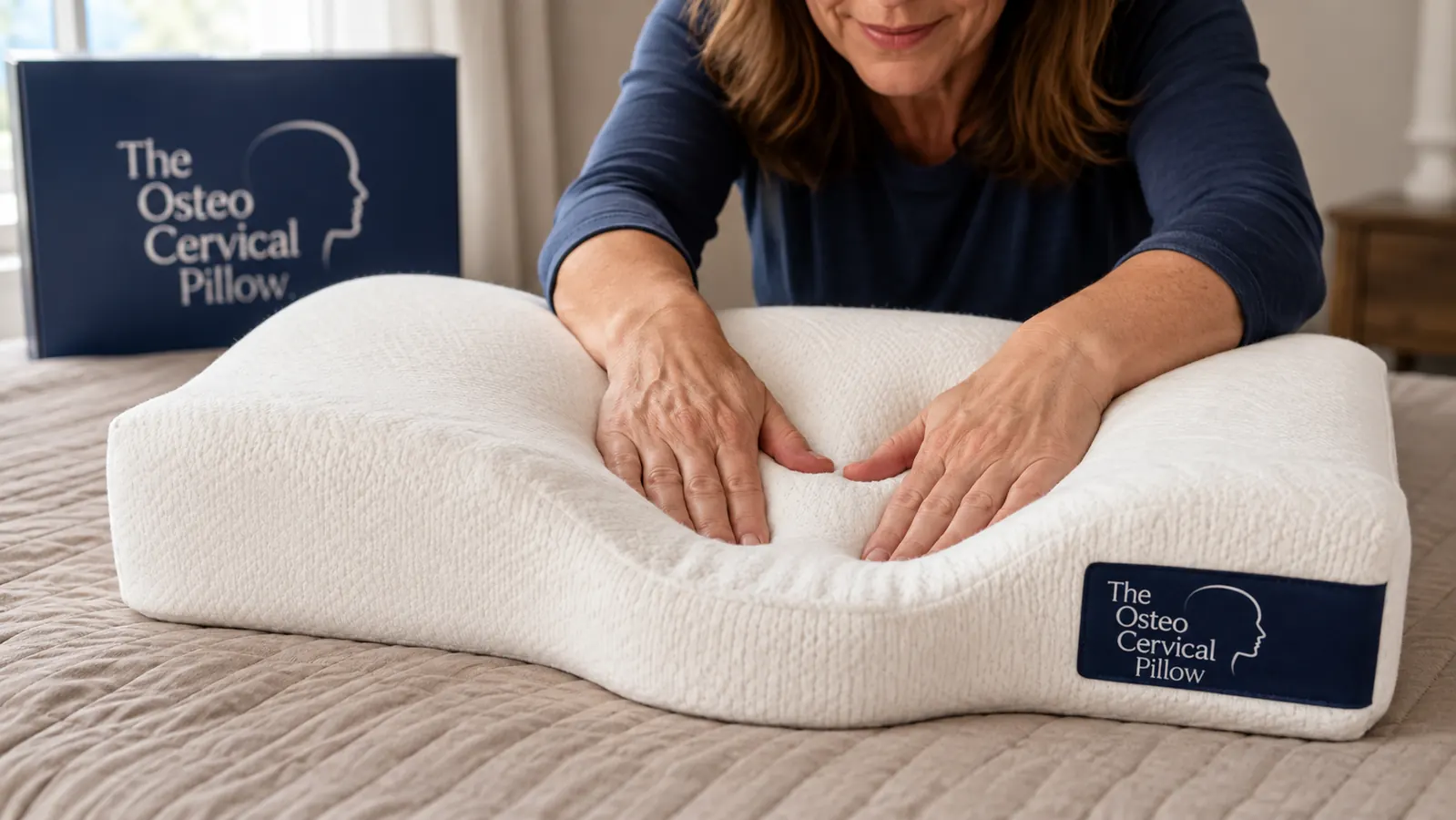
I also paid attention to the pillow from a structural standpoint, because that is the lens I cannot turn off. The Osteo has a hollow center and two raised lobes on either side, one slightly higher than the other. The higher lobe is intended for side sleeping, the lower lobe for back sleeping. The hollow keeps the back of the skull from sinking into the foam while the lobes cradle the neck from underneath. In clinical terms, the design is trying to maintain the natural cervical lordosis. In plain terms, it tries to keep your head, neck, and spine in a reasonably straight line through the night rather than letting your neck droop forward or crane sideways.
The memory foam itself is odorless, which the product name promises and which I was honestly skeptical about. Most new foam smells like the inside of a new car for the first week or two. This one had a faint smell for about two days and then nothing. That matters more than people tend to give it credit for, because scent sensitivity affects sleep onset for a significant portion of the population, and the last thing anyone needs when they are already struggling to sleep is a new chemical smell in their face all night.
What the First Two Weeks Felt Like
I am going to be honest: the first four nights were uncomfortable. The pillow is firm. Not brick-firm, but noticeably firmer than any standard polyester fill pillow, and the contoured shape means you cannot just punch it into a different lump the way you would a regular pillow. The first morning I woke up feeling like I had spent the night on a slightly better surface than a rolled-up sleeping bag. By day three I was adjusting to the shape. By day seven I stopped noticing the firmness and started noticing that something else had changed.
This adjustment period is a real thing that happens with cervical pillows, and I want to be upfront about it because it trips a lot of people up into returning a good product too soon. Your neck muscles have adapted over months or years to being propped at whatever angle your old pillow was holding them. A proper alignment position can feel wrong at first because your soft tissue simply is not used to it yet. I tell the same thing to my patients when I introduce them to a cervical roll for overnight use: expect three to five nights of adjustment, then evaluate honestly. If it still hurts after ten nights, the fit is probably not right for your anatomy. If the discomfort fades, you were almost certainly sleeping worse than you knew.
By week three, I had stopped waking up at 3am. Not because I was sleeping through pain, but because the ache that used to pull me out of sleep simply was not there anymore.
The Alignment Question: What Changed by Week Eight
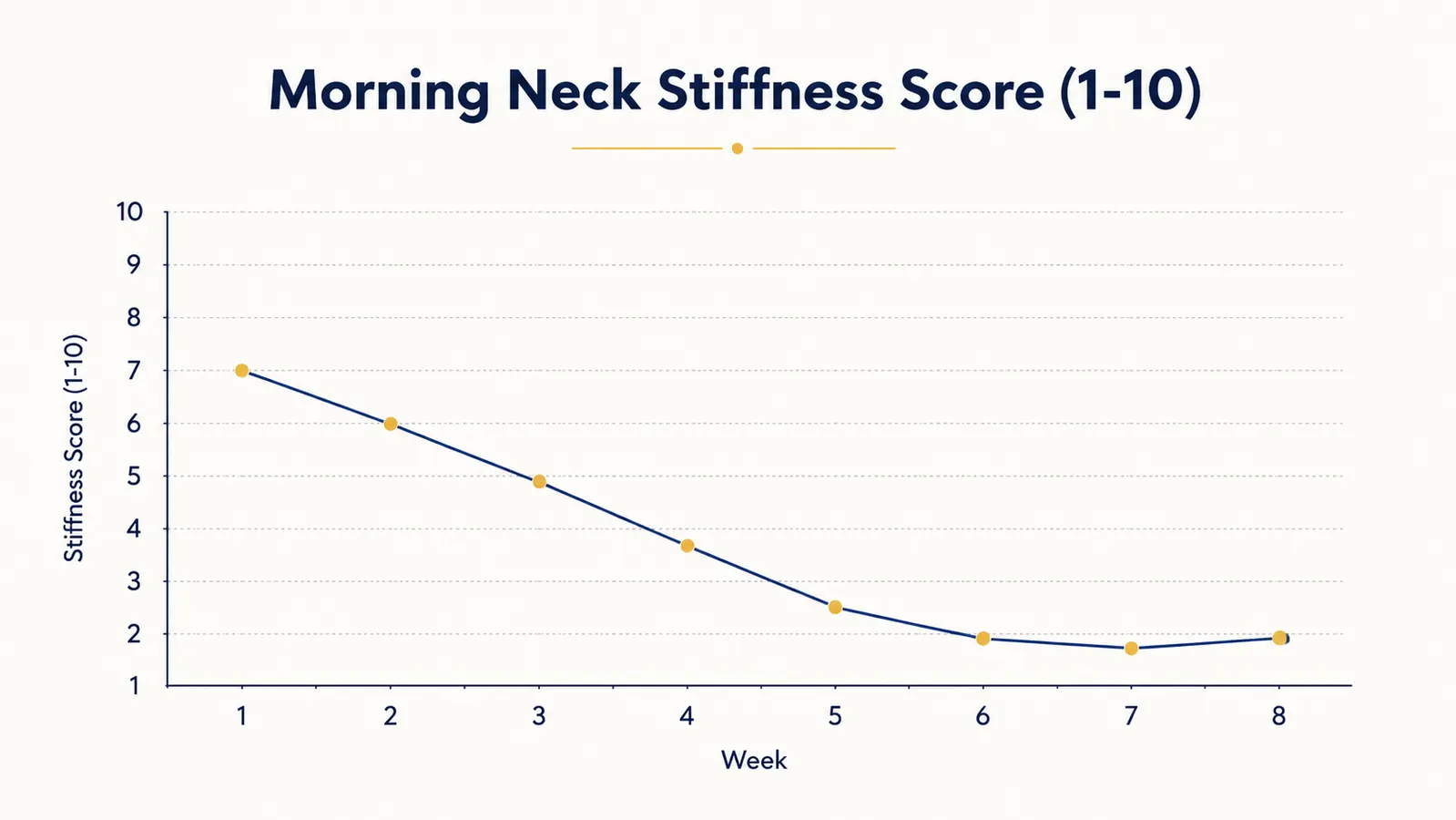
The left-side neck ache that had been waking me up was gone by week three and stayed gone through the remainder of the test period. My morning stiffness score went from a six out of ten in week one to a two by week six, and it held there through week eight. That is a meaningful shift. I was not coming to this pillow from a pain crisis. I am someone with moderate background neck tension from a physically demanding job, and the improvement was incremental and then, around week four, it crossed over into feeling like a normal morning rather than a recovery morning.
The dual-height lobe design deserves specific attention. I am five feet four inches and a side sleeper for most of the night. The higher lobe kept my cervical spine in a noticeably more neutral position than a standard pillow does. I could feel the difference in how my shoulder sat, which sounds like a small detail until you understand that shoulder position during side-sleeping directly affects both the cervical facet joints and the brachial plexus, which is the nerve bundle running from the neck down through the arm to the fingertips. If you routinely wake up with tingling or numbness in your hand or arm, pillow height is often the first structural variable to address before anything else.
The hollow center also performed better than I expected for the nights I ended up on my back. It prevents the compression that happens when the base of the skull is pressed forward by too much pillow height, which is exactly the thing that creates that groggy, heavy-headed feeling in the morning when you slept on your back all night. I noticed I was not waking up to reposition as often on my back compared to before, which suggests the pillow was holding me in a position I could sustain comfortably without my body signaling to wake up and move.
Heat Retention and Washability
Memory foam and heat retention are a known combination, and this pillow is no different from other solid foam products in that respect. During the first warm weeks of spring, I noticed the foam held more warmth than a standard pillow. It was not uncomfortable enough to disrupt my sleep on its own, but if you already run warm at night or live somewhere nights stay above 70 degrees for most of the year, this is worth thinking about before you buy. The pillow does not have gel infusion or any specific cooling structure. If you sleep hot, pair it with a breathable bamboo or Tencel pillowcase and you will be in much better shape than with a standard cotton case.
The removable zippered cover washed well in a cold gentle cycle with no shrinking or pilling. The zipper stayed intact. The foam core is not machine-washable, which is standard for any solid memory foam product, but spot-cleaning handles the occasional situation without trouble. In eight weeks of regular use the pillow held its shape without any noticeable compression loss in the lobes, which is the durability marker I care most about with foam pillows because compression loss is what turns a good cervical pillow into a flat, useless one over time.

Who the Osteo Cervical Pillow Is Best For
Back sleepers and side sleepers who wake up with neck stiffness, shoulder tension, or the groggy heavy-head feeling are the people most likely to get real benefit from this pillow. The dual-height design handles both positions better than a flat memory foam block does. People who have been told by a doctor or physical therapist to support their cervical curve during sleep are also well-matched to this product, because the pillow is built around exactly that principle without requiring a prescription device or special fitting. If you want a plain-language explanation of how this type of pillow affects pain, I have covered 10 evidence-based reasons a cervical pillow helps neck pain elsewhere on this site.
Adults who are sensitive to chemical smells will appreciate the genuinely low off-gassing. I have had patients and readers ask me about this specifically when shopping for foam products, and it is one of the things I can say definitively about the Osteo: it is not a smell problem. For anyone who wants to understand how the contoured design stacks up against a conventional pillow on a more technical level, I also wrote a detailed breakdown of how it compares to a standard pillow that covers height, material, and position support side by side.
What I Liked
- Real improvement in cervical alignment for back and side sleepers after the adjustment period
- Genuinely odorless from the first night, unlike most new memory foam products
- Dual-height lobe design addresses both sleep positions without needing two pillows
- Foam holds its shape well with no compression loss after eight weeks of nightly use
- Hollow center reduces skull-base compression and the heavy-headed groggy morning feeling
- Removable cover washes cleanly and the zipper stays intact
Where It Falls Short
- Firm feel requires a five to ten night adjustment period that can feel discouraging early
- Retains heat and is not suitable for warm sleepers without a cooling pillowcase
- Not appropriate for stomach sleepers, who need a much flatter profile
- Higher lobe may sit too tall for petite adults or anyone under roughly 120 pounds
Who Should Skip It
Stomach sleepers should not use this pillow. The lobe height forces the neck into extension while lying face-down, which is exactly the opposite of what you want in that position. If you sleep primarily on your stomach and neck pain is your issue, the answer is retraining your sleep position gradually over time, and a cervical pillow will not help and may make things actively worse. The other group I would steer away is anyone who runs warm at night and does not have the option to pair the pillow with cooling bedding. The heat retention is manageable in mild weather but it is real and it compounds over a full night.
I also want to say something that tends to get left out of pillow reviews: a pillow is one variable among several. If your mattress is significantly too soft or too firm for your body weight, or if you have a diagnosed disc herniation or significant arthritis in the cervical spine, a new pillow will help at the margins but it is not a substitute for treatment. What it can do is remove a source of mechanical stress during the eight hours when your body is supposed to be recovering. For most people with ordinary background neck tension from desk work, driving, and the general compression of a busy life, removing that overnight stress is more than enough to change how mornings feel.
Two months of better mornings is worth a week or two of adjustment.
The Osteo Cervical Pillow carries a 4.3-star rating from over 20,000 buyers on Amazon. If your neck has been waking you up or leaving you stiff every morning, it is worth checking the current price before another restless night.
Amazon Check Today's Price on Amazon →