

I spend my workdays telling people how to take care of their necks. I show them how to sit, how to move, which pillows support the cervical curve and which ones quietly destroy it. Then I go home, fall asleep on whatever pillow happens to be on my bed, and wake up stiff every single morning. That was my reality for about eight months last year. The Osteo Cervical Pillow sat in my Amazon cart for a few weeks before I finally ordered it. I kept telling myself I already knew how pillows worked, so I probably did not need to spend the money. I was wrong about that.
The stiffness I am talking about was not dramatic. It was not the kind that stops you in place or sends you to urgent care. It was the kind that sits at the base of your skull when you wake up, travels down into the left trapezius by mid-morning, and leaves you rotating your head in the parking lot between patients hoping nobody notices. I had a flat medium-fill pillow that I had been using for probably three years. It was comfortable enough when I got into bed. By 3 a.m. my neck had decided otherwise.
I tell patients all the time that the pillow is not a luxury item. It is a piece of physical therapy equipment that you use for eight hours straight. I had just never applied that logic to myself.
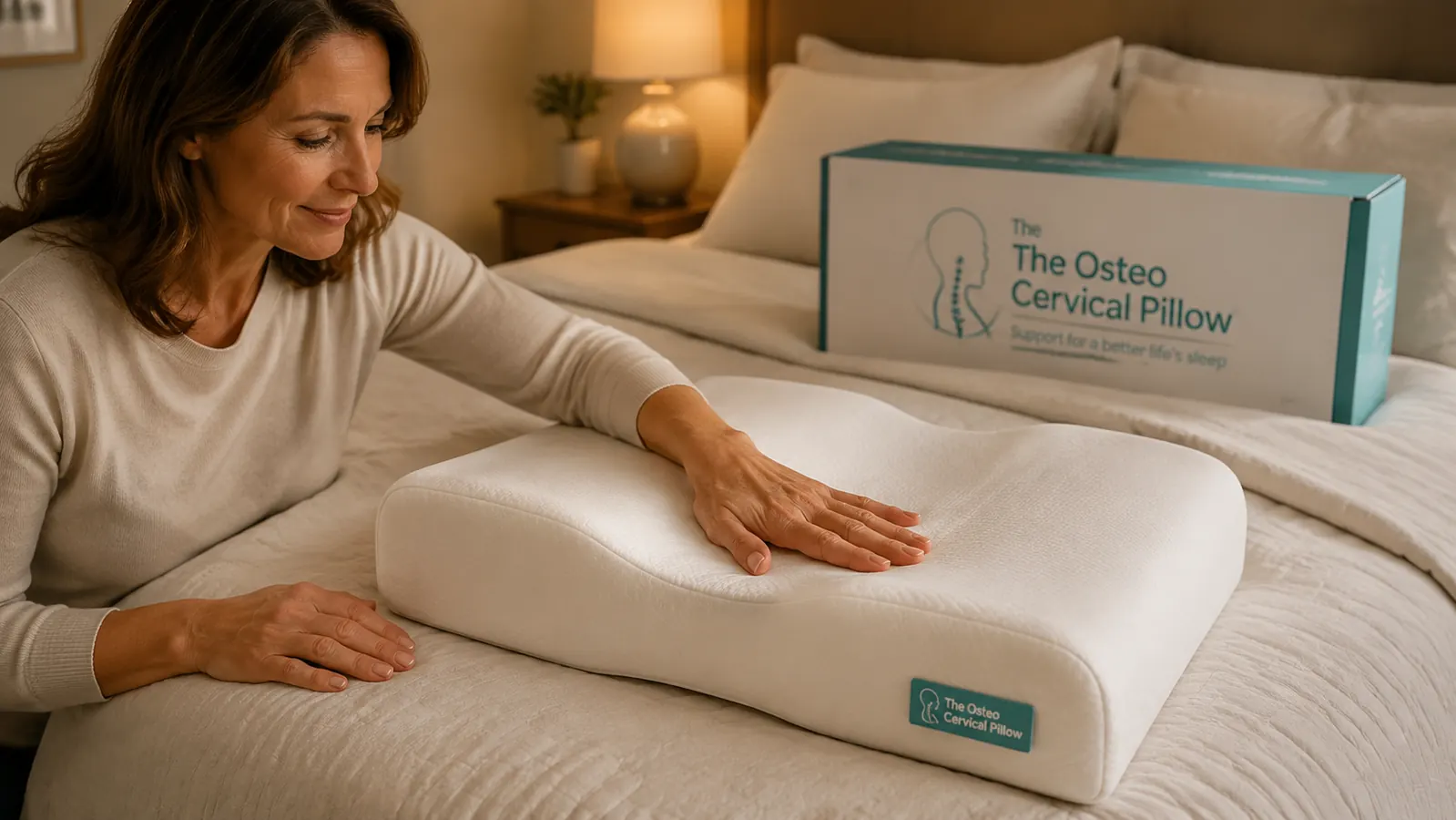
When the Osteo arrived I did what I always tell patients not to do. I put it on the bed that night and expected to feel amazing by morning. The first two nights were strange. The contoured shape holds your head in a specific position and your body has to recalibrate to that. I woke up after the first night thinking I had made a mistake. I woke up after the second night noticing my left shoulder was not tight the way it usually was. By the end of the first week I had stopped reaching for ibuprofen before breakfast.
Your neck spent all night on something. Make sure it was worth it.
The Osteo Cervical Pillow has over 20,000 ratings on Amazon. Check today's price before you buy another flat pillow that does not support your cervical curve.
Amazon Check Today's Price on Amazon →Here is what the pillow is actually doing. A typical flat pillow lets your head sink and tips the chin forward, which compresses the facet joints at the back of the cervical spine. Over eight hours that is a lot of sustained load in the wrong direction. The Osteo uses a contoured foam design with a higher outer ridge and a lower channel in the center, so the neck rests in something closer to its natural curve. The foam is medium-firm and has a hollow center that reduces pressure at the back of the skull. For back sleepers it works well as advertised. I am primarily a back sleeper, which is probably why the improvement came fairly fast for me.

Side sleeping is a different story. I tried it on my side a few times and it was fine but not exceptional. The outer ridge gives some lateral support but the pillow is really designed around the supine position. If you sleep mostly on your side and stay there all night, you may want to look at something with a different loft before assuming this will fix the problem. I am not saying it will not work for you. I am saying it worked best for me when I was on my back, and that is where most of the benefit came from.
One thing nobody mentions in the product listing: it takes about a week for the foam to soften to your head weight. The first night it feels firmer than you expect. That initial firmness is what makes some people return it too soon. If you can get through five nights, the foam adjusts and the pressure profile changes noticeably. I tell patients the same thing about orthotics. The first few days feel off because your body is used to compensating for the problem. The discomfort of correction is different from the discomfort of injury.
I have been using this pillow for about four months now. The morning stiffness is mostly gone. There are still occasional days where I overdid it in the clinic or sat at the laptop too long, and those mornings my neck reminds me. But the baseline changed. The daily low-grade tightness I had accepted as normal turned out not to be inevitable. That felt worth noting.
What I Would Tell You If We Were Sitting at My Kitchen Table
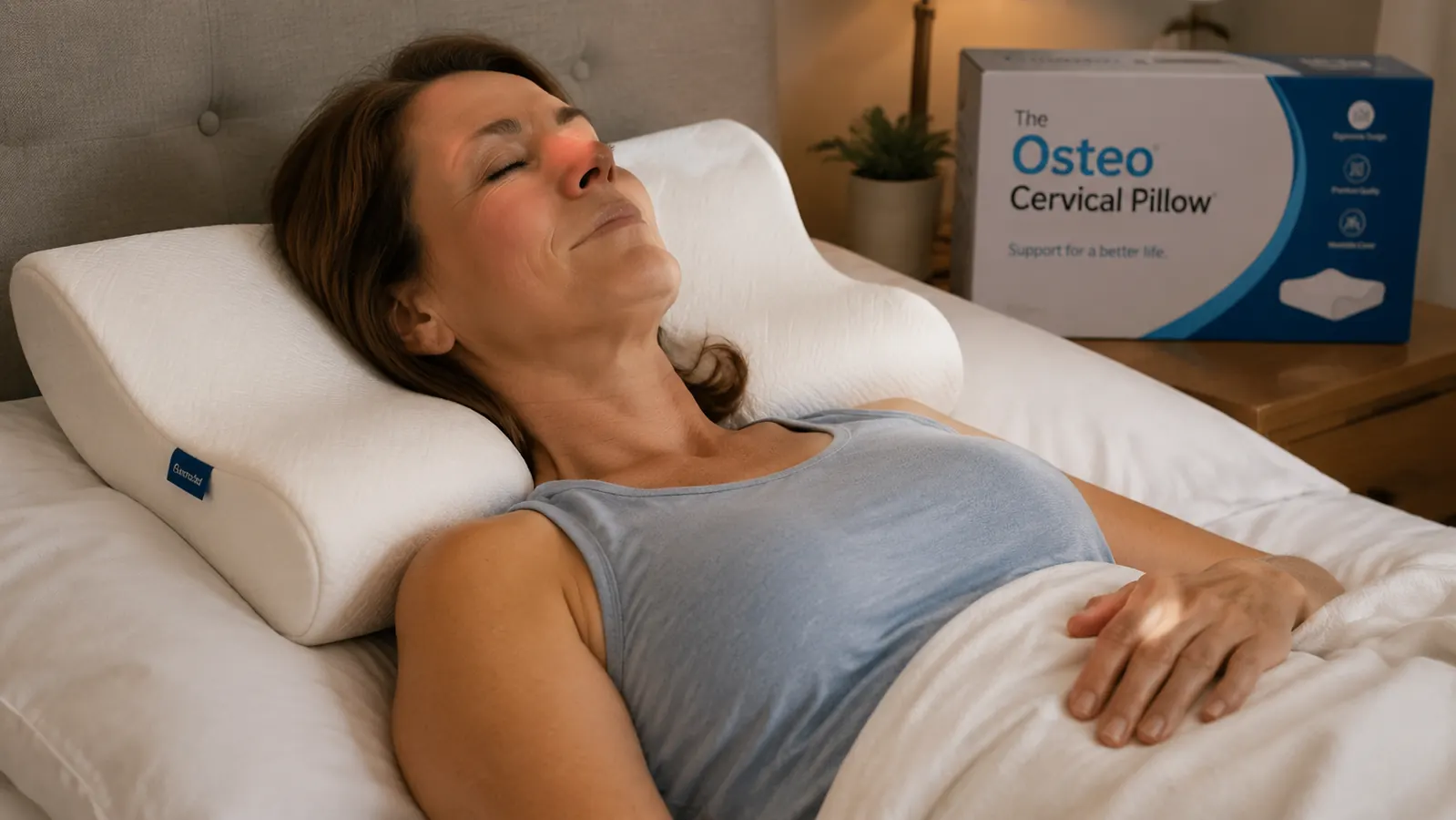
If you told me you were waking up with neck pain and you asked what I thought about cervical pillows, here is what I would say. Start with your sleep position. If you are mostly a back sleeper and your current pillow is flat or worn out, a contoured memory foam pillow like this one is a reasonable, inexpensive place to start before you book an appointment with anyone. Give it ten nights minimum. Your body needs time to adapt and the foam needs time to break in.
If you are a confirmed side sleeper with significant neck issues, a pillow alone may not be enough. Come see someone like me, adjust your sleep position if you can, and think of the pillow as one part of a larger picture. You can read more about the research behind cervical pillows in my piece on 10 reasons a cervical pillow can ease neck pain, or check out my full long-term review if you want the detailed breakdown of what I tracked over eight weeks.
I am a PT. I am skeptical by training. I was not expecting a pillow to move the needle the way this one did. It did not fix everything. It did not replace the stretching I do in the morning or the posture work I try to do at my desk. But it gave my neck a better starting point every day, and at this price point, that is a trade I would make again without thinking twice.
Eight hours every night is a long time to spend on the wrong pillow.
If morning neck stiffness is your normal, it does not have to be. The Osteo Cervical Pillow has over 20,000 Amazon ratings and costs less than a single co-pay. Check the current price before you decide.
Amazon Check Today's Price on Amazon →