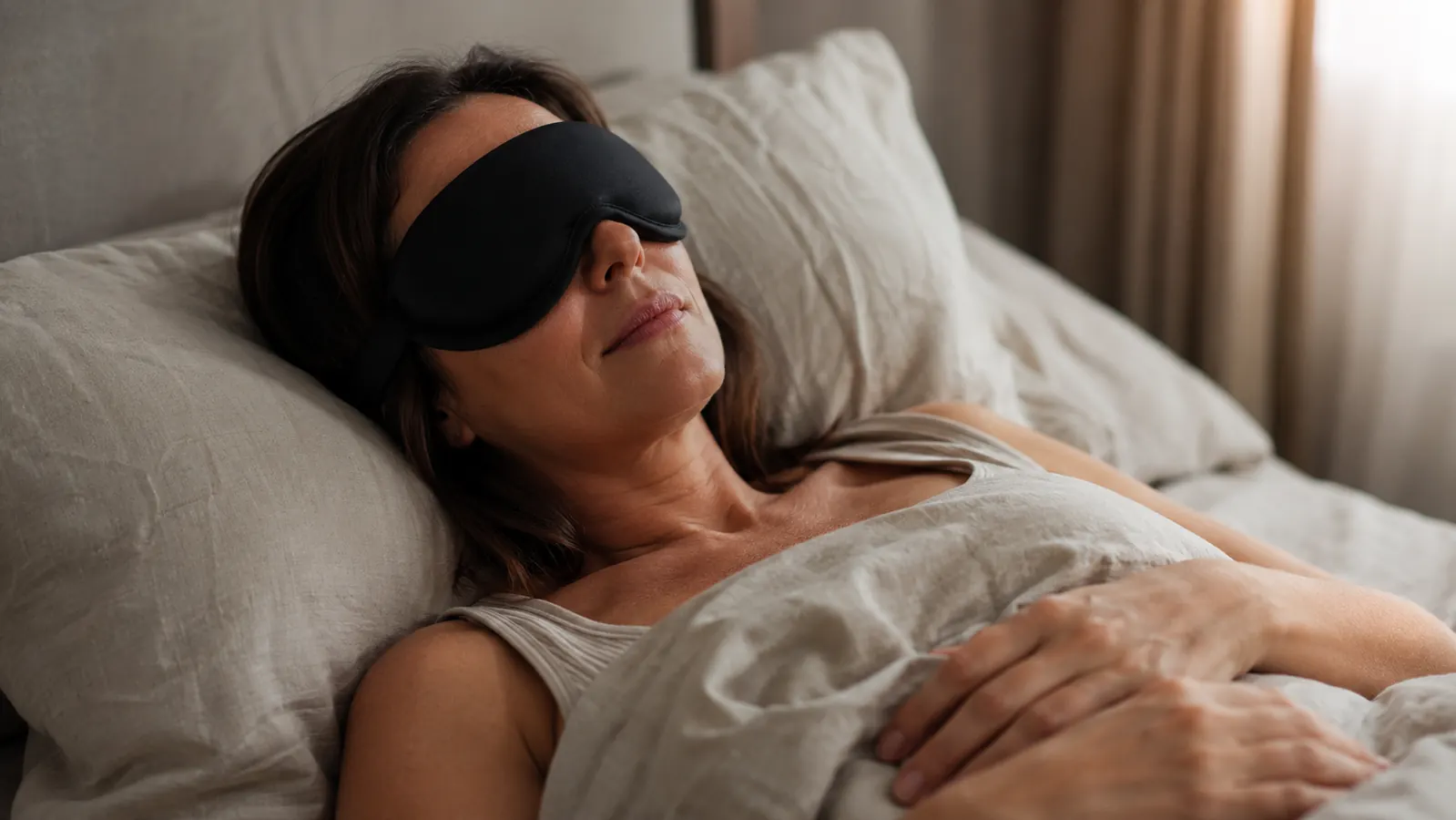
Light wakes you up. That is not a habit or a mindset issue. It is biology. Your brain reads any light signal as a cue to reduce melatonin and start the wake cycle, even if you have only been asleep for four hours. Streetlights leaking around your curtains, a partner's phone screen, the first pale gray of 5am sunrise in summer, any of these can pull you out of the deepest sleep stage you get. The fix is not blacking out your whole room, which is expensive and does nothing when you travel. The fix is a good sleep mask worn correctly. I have been recommending the MyHalos 3D Blackout Sleep Mask to patients and using one myself for over a year. At a very affordable price, it removes more light-related sleep disruption than any curtain upgrade I have seen, and it works whether you are at home, on a plane, or in a hotel room where the blackout shades have a two-inch gap.
The five steps below are what I walk patients through in clinic when they are dealing with light-driven early waking or trouble falling asleep in shifting environments. Each step is small on its own. Together, they get most people to consistent darkness within one or two nights.
Still waking up before your alarm because light got through? Here is the sleep mask I recommend.
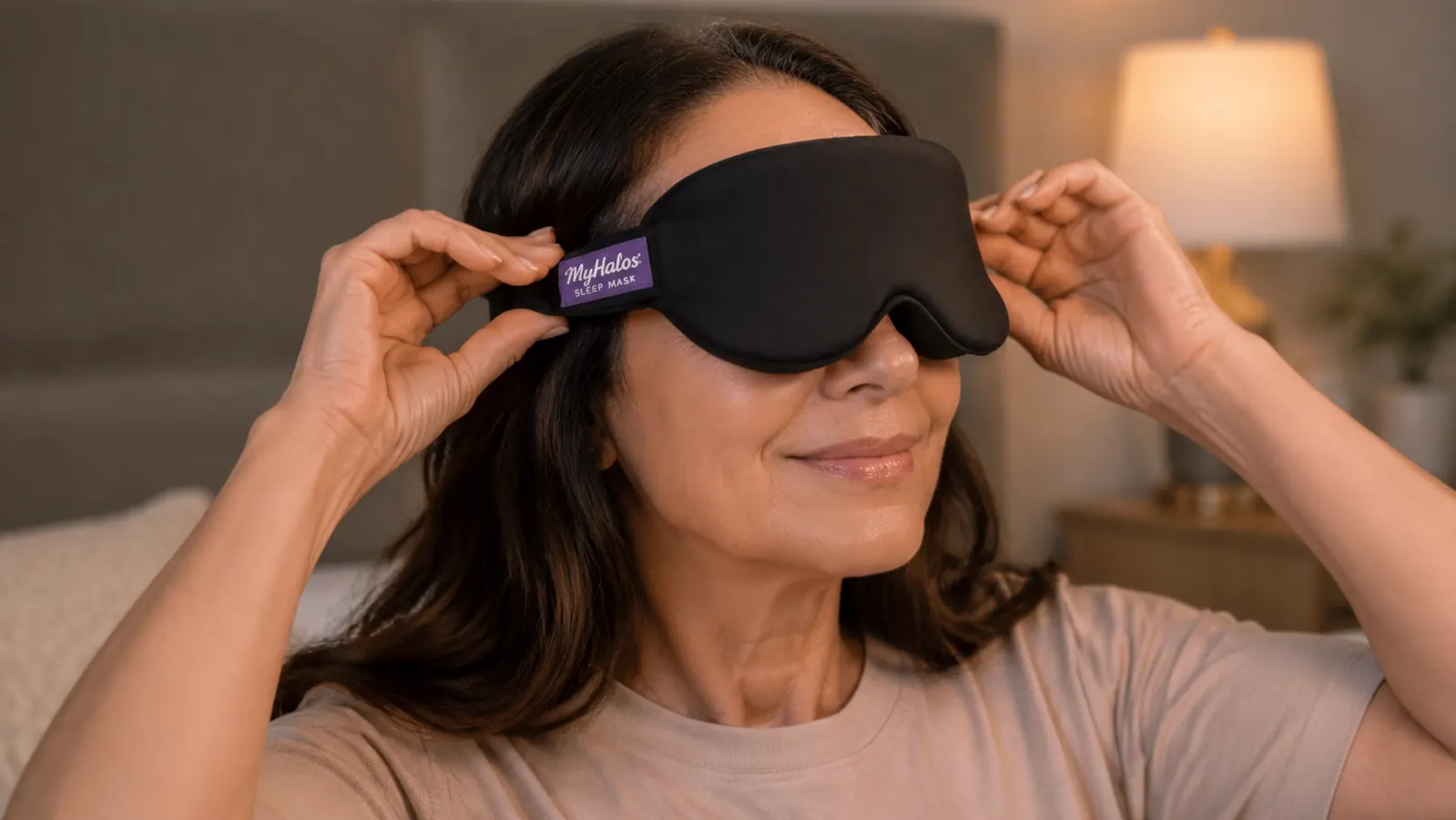
The MyHalos 3D Blackout Sleep Mask has a contoured eye cup that sits above your lashes, seals along your nose bridge and cheekbones, and stays put for side sleepers. Over 21,000 Amazon ratings at 4.7 stars. Check today's price below.
Amazon Check Today's Price on Amazon →Step 1: Choose a Sleep Mask with a 3D Contoured Shell, Not a Flat Pad
Most people's first sleep mask is a flat foam or fabric pad that rests directly on the eyelids. It blocks some light, but it also presses on your corneas and eyelashes, which creates a dull pressure sensation that some people tolerate and many do not. More importantly, a flat eye mask can shift when you roll over, and a gap at the nose bridge or temple lets light flood straight in. If you have ever woken up at 5am with your sleep mask pushed to one side and streetlight in your eyes, this is the design problem.
A 3D contoured sleep mask solves both problems. The rigid or semi-rigid eye cups hold the fabric away from your lids, so there is no pressure on your eyes at all. You can actually blink freely inside the mask. The shaped perimeter then seals against your cheekbones, nose bridge, and forehead rather than relying on a flat fabric wall, which means the seal is more consistent even if you change positions. When I fitted myself for my first 3D eye mask, the difference from a flat pad was immediately obvious. No pressure, better perimeter contact, far less light bleed.
Look for masks where the eye cups are deep enough that your lashes do not brush the inside surface when your eyes are closed. The MyHalos design sits roughly 15 to 18 millimeters off the lid surface, which is enough for most people. If you have very long lashes or wear eyelash extensions, this clearance matters more, and a contoured sleep mask is the only design worth trying.
Step 2: Adjust the Strap So the Sleep Mask Seals Without Squeezing
Strap tension is where most people calibrate wrong. The instinct is to tighten the strap until the mask feels very secure, but too much tension pulls the eye cups down into the orbital bones and creates a headache behind the brow or temples within thirty minutes. I have had more than a few patients tell me their sleep mask gave them headaches, and in almost every case, the strap was two notches too tight.
The correct tension is snug but not compressive. Lay the mask loosely over your eyes first, then bring the strap back and tighten it just until the perimeter makes even contact with your skin. You should not feel the strap pulling anywhere on your head. The mask should feel like a resting hand on your face, not a clamp. Most people land around a medium strap length. If you find yourself at the tightest setting and still getting light bleed, the issue is mask position, not strap tension.
The MyHalos strap is adjustable with a simple slide buckle that is easy to set in the dark. One tip: set your preferred length during the day with good lighting, then leave it there. Fumbling with strap adjustments in the middle of the night when you are half asleep adds friction you do not want.
Step 3: Seal the Nose Bridge to Stop Light Bleed Under the Sleep Mask
The nose bridge is the single most common leakage point on any sleep mask. It is a contoured area on most faces, and a mask that sits perfectly flat across your cheekbones may still leave a triangular gap along the nose where light sneaks in. This is especially true for people with a higher nose bridge or narrower facial structure.
To check your seal, put the mask on in a lit room and press your hands gently against the outside. If you see a change in brightness, you have a gap. The most common fix is simply adjusting the mask down slightly so the lower edge of the eye cup sits closer to the top of your cheekbone. Some masks, including the MyHalos, have a slight foam padding along the nose bridge edge that helps conform to facial contours. Pressing the nose piece gently against your face for a few seconds when you first put the mask on helps it settle into place before you start moving around.
If you are a stomach sleeper and pressing your face into a pillow, the nose bridge seal will shift anyway. For stomach sleepers, a sleep mask works best paired with a pillow that has a center cutout or with a buckwheat pillow that can shape around the mask rather than pushing it off-axis. Most of my patients who sleep on their stomach find side sleeping easier with the right pillow, but the sleep mask itself does not need to change.
Step 4: Keep the Sleep Mask on Through Light-Sensitive Hours, Not Just at Bedtime
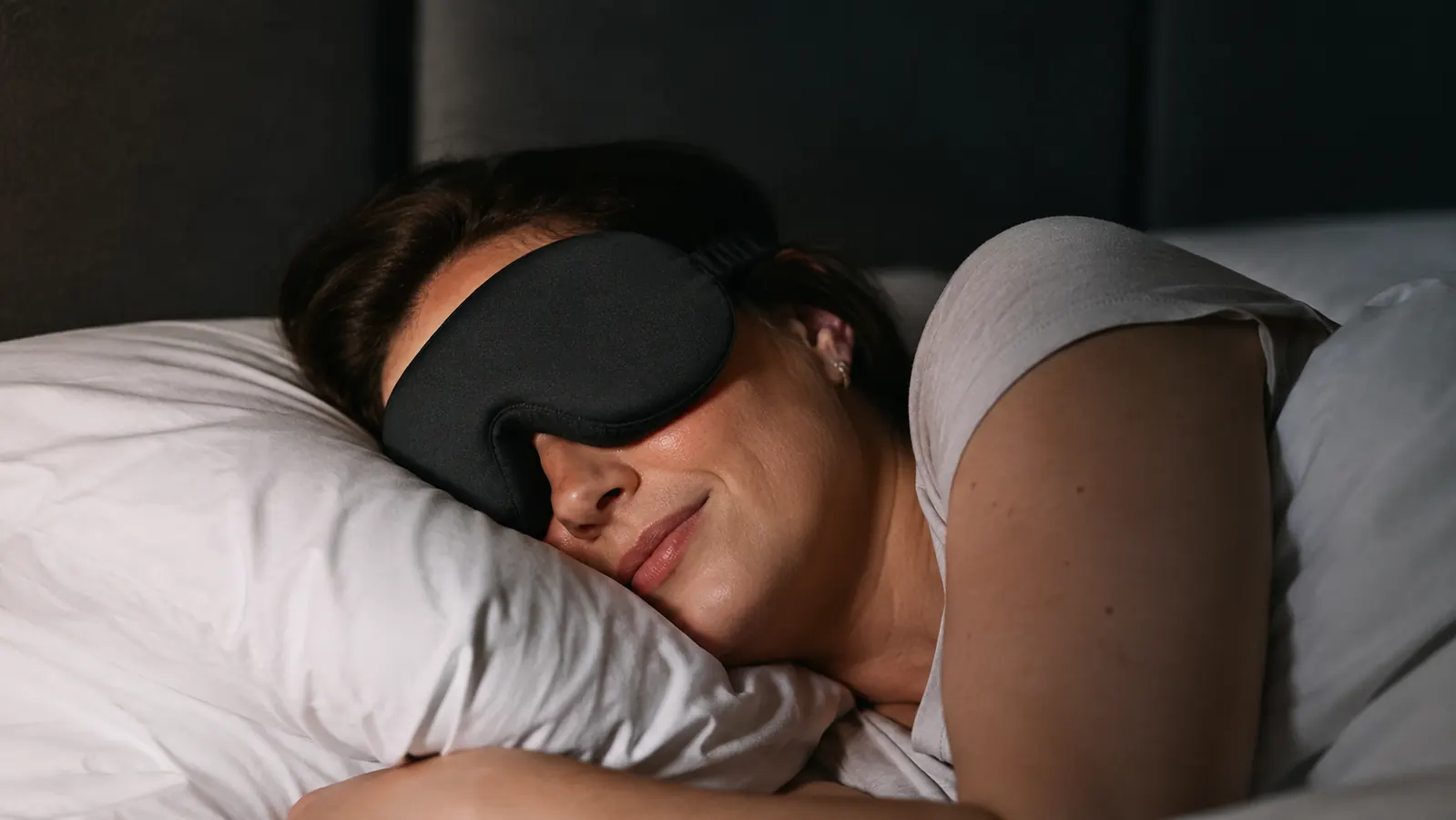
The most common mistake I see is people putting on a sleep mask at bedtime when the room is already dark, then pulling it off in the middle of the night once they are asleep, or it falls off and they do not replace it. The mask's real job is not blocking darkness at 10pm. It is blocking the light that arrives between 4am and 7am: early sunrise in summer, streetlights cycling on and off, a neighbor's outdoor light, a partner who wakes before you. That is the light that shortens your sleep.
If your sleep mask is uncomfortable enough that you pull it off during the night, that is a fit problem, not a tolerance problem. A properly fitted 3D eye mask, worn at the right strap tension, should be forgettable within ten minutes. Many people find they do not notice it at all by the second or third night. If you are waking up with the mask on your forehead or beside you in the bed, revisit Steps 2 and 3. Nine times out of ten, a strap that is slightly too tight causes enough discomfort that the body removes it while you are still half asleep.
The mask's real job is not blocking darkness at 10pm. It is blocking the 5am sunrise that cuts your sleep short every summer morning.
Step 5: Adapt the Sleep Mask for Travel and Variable Light Environments
A sleep mask becomes even more valuable outside your home, where you have no control over the room's light environment. Hotel rooms are notorious for bright hallway light under doors, blinking power strips, glowing smoke detectors, and blackout shades with wide gaps at the edges. On planes and trains, overhead lighting and seatback screens are constant. A sleep mask turns any environment into a controllable sleep space.
For travel, keep your sleep mask in a consistent place, either a front pocket of your carry-on or a small pouch on your nightstand at home. The ritual matters. Knowing exactly where the mask is reduces the barrier to using it, especially when you are tired and moving through unfamiliar spaces. The MyHalos comes with a small storage pouch, which is useful for keeping it from getting crushed or picking up lint in a bag.
One adaptation worth noting for travel: if you are crossing time zones and trying to sleep at an unusual local time, a sleep mask combined with earplugs is one of the most effective low-cost tools for resetting the body clock. Your brain uses both light and sound as timing signals. Removing both gives it less to argue with. I have used this combination for overnight transatlantic travel for years, and the difference in how I feel on arrival is measurable.
What Else Helps When a Sleep Mask Is Not Enough
A sleep mask solves the light problem, but light is not always the only thing disrupting sleep. If you are waking in the night and the mask is staying in place with good coverage, look at the other sensory inputs. Sound is the second most common culprit, and it is especially disruptive for light sleepers who have gotten the light problem under control. A white noise machine or even a simple fan running in the room masks the unpredictable sounds, like a dog barking, a car door slamming, or a neighbor's late return, that pull you out of sleep more reliably than a constant sound does.
Temperature is the third variable, and it is the one most people underestimate. Your core body temperature needs to drop about one to two degrees Fahrenheit to initiate and maintain deep sleep. If your room is warm, your bedding is trapping heat, or you are running warm from exercise or alcohol, the nervous system stays more alert even when light and sound are controlled. A sleep mask helps, but it does not fix a room that is 74 degrees. The ideal sleep temperature for most adults is 65 to 68 degrees Fahrenheit.
Finally, if you are doing everything right with the sleep mask, the room is cool, and sound is managed, and you are still waking at 3am or 4am and cannot get back to sleep, that pattern deserves a conversation with your doctor. Early morning waking that is not explained by light or sound is one of the presentation patterns for sleep apnea, depression, and certain hormonal changes. A sleep mask is a tool, not a diagnosis. Use it for what it does well, and recognize when something else is going on.
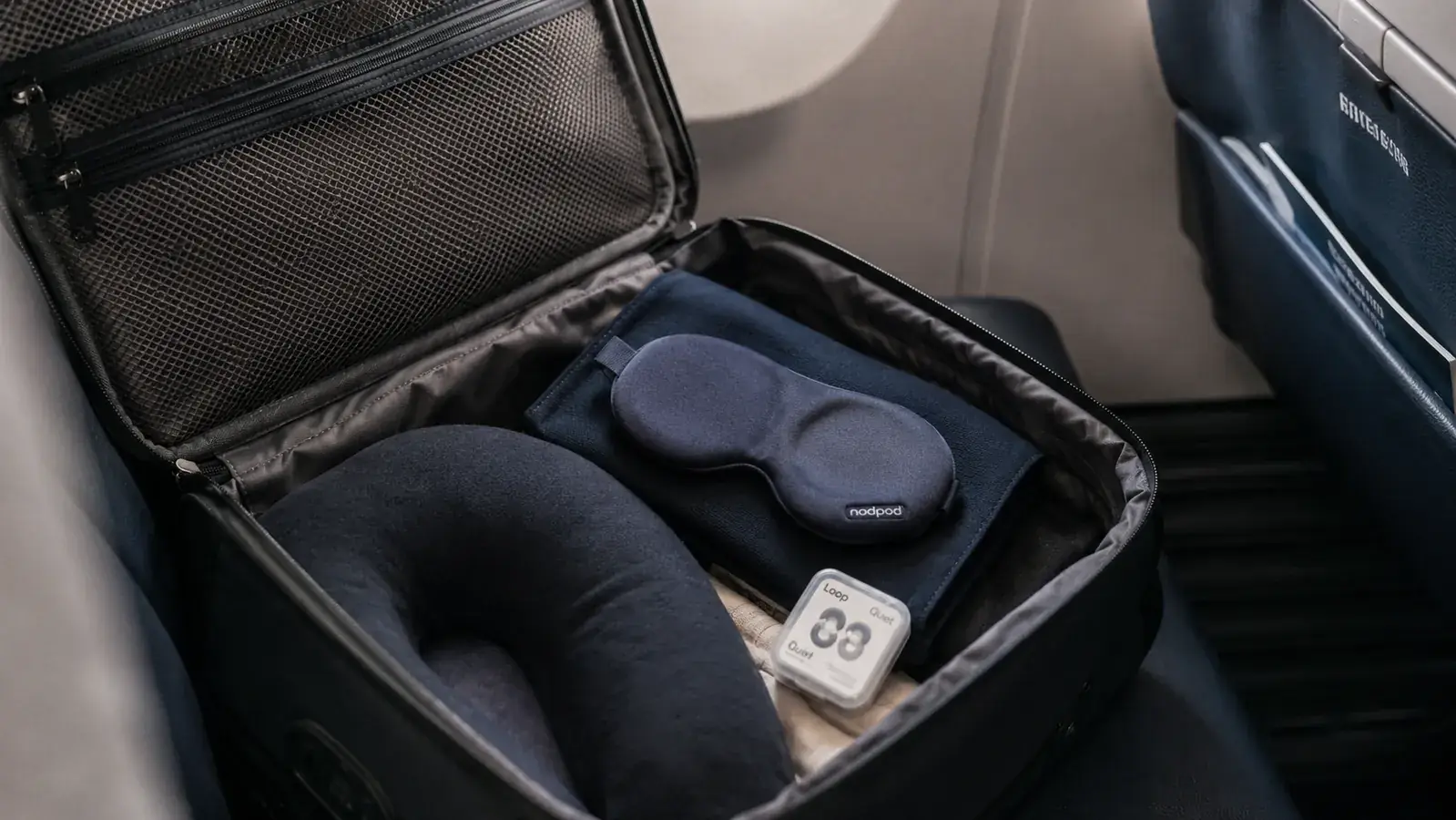
If light is cutting your sleep short, a 3D sleep mask is the lowest-effort fix I know.
The MyHalos 3D Blackout Sleep Mask is what I use and what I recommend in clinic for patients dealing with ambient light. Contoured eye cups, adjustable strap, side-sleeper friendly, and budget-priced. Over 21,500 reviews at 4.7 stars on Amazon. Check today's price below.
Amazon Check Today's Price on Amazon →For a deeper look at how the MyHalos holds up over weeks of daily use, see the MyHalos Sleep Mask long-term review. If you are deciding between a 3D contoured design and a traditional flat eye mask, the 3D sleep mask vs flat eye mask comparison walks through the real differences for side sleepers and travelers.